




Real estate financing can feel complex at first glance, but once you understand how a mortgage payment is built, the process becomes far more manageable. Whether you’re buying your first home or planning a move after many years, knowing the basics of financing helps you make confident, informed decisions.
At its core, your monthly housing payment is made up of several key components, commonly referred to as PITI.
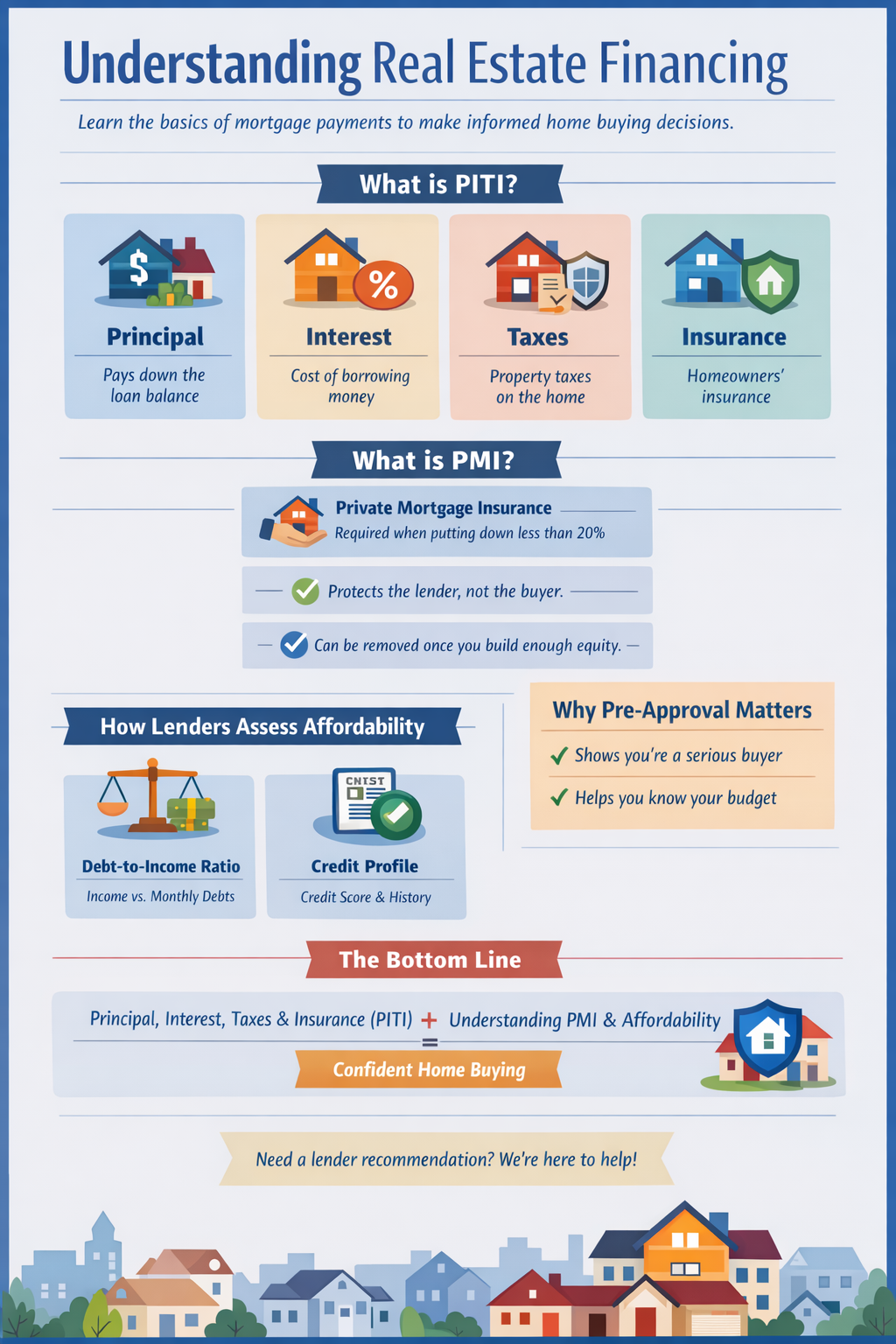
What is PITI?
PITI is an acronym lenders use to describe the four main parts of a typical mortgage payment
Principal:
This is the portion of your payment that goes toward paying down the original loan balance. Early in the loan, a smaller share of your payment goes to principal, but that portion grows over time as the loan amortizes.
Interest:
Interest is the cost of borrowing money from the lender. It’s calculated based on your interest rate and remaining loan balance. Like principal, the interest portion of your payment changes over time, with more interest paid in the early years of the loan.
Taxes:
Property taxes are assessed by your local municipality and are often collected monthly by the lender and held in an escrow account. When taxes are due, the lender pays them on your behalf. Tax amounts vary by location and can change year to year.
Insurance:
This typically refers to homeowners’ insurance, which protects the home itself. Like taxes, insurance premiums are often escrowed and paid by the lender. Depending on the property, this can also include additional coverage such as flood insurance.
Together, these four elements make up your estimated monthly mortgage payment.
What is PMI?
PMI stands for Private Mortgage Insurance. It’s required on many conventional loans when a buyer puts down less than 20 percent of the purchase price.
PMI protects the lender, not the buyer, in case of default. While it does increase the monthly payment, it allows buyers to purchase a home with a smaller down payment. PMI costs vary based on loan type, credit score, and down payment amount.
The good news is that PMI is not permanent. In many cases, it can be removed once sufficient equity is built, either through paying down the loan or through home value appreciation.
How do lenders determine what you can afford?
When evaluating a buyer, lenders look at more than just income. Two important metrics are:
Debt-to-income ratio:
This compares your monthly debt obligations to your gross monthly income. It helps lenders assess how comfortably you can manage your payments.
Credit Profile:
Your credit history influences interest rate options and loan programs. Strong credit often results in more favorable terms, but there are many financing paths available across a wide range of credit profiles.
Why Pre-Approval Matters:
A mortgage pre-approval provides a clearer picture of your buying power and strengthens your position when making an offer. It shows sellers that your financing has been reviewed by a lender and that you’re prepared to move forward.
Pre-approval also helps buyers shop within a realistic price range, reducing surprises later in the process.
The Bottom Line
Real estate financing isn’t just about the interest rate. Understanding how principal, interest, taxes, insurance, and mortgage insurance work together gives you a fuller picture of what homeownership costs month to month.
A thoughtful financing strategy, paired with the right guidance, can make the process smoother and more predictable. Asking questions early and understanding the numbers behind the purchase helps set the foundation for a confident and successful move.
If you’re in need of a mortgage lender recommendation, reach out. We have a list of professionals we’d be happy to share with you.